

__________________________________________________________________
Question 5
(Note: there are three questions to answer about the passage!)
In 1880, fourteen-year-old Matthew Henson loved to hear sailors tell tales of their exciting lives at sea. The travel, the adventure, the danger, and the steady pay were all appealing to young Henson. One day he made up his mind. Baltimore was the nearest large seaport. The next morning he set out on the forty-mile journey to seek work on a sailing ship.
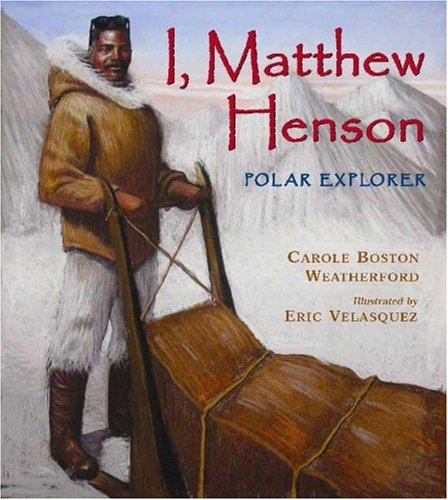
In Baltimore, Henson found a job as a cabin boy on a beautiful ship called the Katie Hinds. For the next five years, Henson sailed around the world. With the help of the ship’s captain and other members of the crew, Henson learned mathematics, navigation, history, geography, and many other subjects. By the time he left the Katie Hinds in 1885, Henson was well educated and had become an excellent seaman.
Unable to find work anywhere else, Henson took a job in a hat shop in Washington, D.C. One day in 1887, a man came in to buy a hat. The man, Lieutenant Robert Peary, asked the owner if he knew anyone with experience at sea. Peary would soon travel to South America for the U.S. government. He needed experienced men to accompany him.
The shop owner knew about his young employee’s skills and experience on ocean voyages, so he introduced Peary to Henson. Henson and Peary liked each other instantly. They had a great deal in common, including their love of the sea.
Using his map-reading and sailing skills, Henson proved himself to be a worthy and intelligent seaman. Peary soon made Henson his assistant, and they became close friends. One day Peary told Henson about his real dream: to be the first man to stand on “the top of the world” at the North Pole. He asked Henson to help him make his dream come true.
Over the next five years, the two explorers made two trips together to the Arctic. However, they were not able to reach the pole either time. The cold, wind, and ice were worse than either of them had ever imagined. On each trip, though, Henson learned something new about traveling in frozen polar regions.
In 1908, Peary and Henson were ready to make their final attempt at reaching the North Pole. Both men were over forty years old. The years of hardship and suffering in the arctic cold had taken their toll on both men. This would be their last chance.
With four Inuit guides, they made a mad dash straight across the ice toward the pole. Peary’s feet were so frostbitten he had to be pulled on a dogsled. In April 1909, Henson’s instruments showed they were standing at the North Pole. Together Henson and Peary planted the American flag in the snow.
In later years, Robert Peary and Henson were greatly honored for their accomplishment. Today, the two friends and fellow explorers lie in heroes’ graves not far apart in the Arlington National Cemetery.
I. Why did the author include paragraph 3 in the passage?
A. To show why Matthew Henson went to the hat shop
B. To show how Matthew Henson met Robert Peary
C. To show how Robert Peary knew that Matthew Henson had sea experience
D. To show why Matthew Henson stopped working on the Katie Hinds
II. Read the following sentence.
The years of hardship and suffering in the
arctic cold had taken their toll on both men.
The phrase 'taken their toll' means that the years Peary and Henson spent exploring in the Arctic had:
A. Helped them.
B. Satisfied them.
C. Weakened them.
D. Enlightened them.
III. In this nonfiction passage, the author mainly
A. Describes the beauty of the Arctic.
B. Encourages readers to explore.
C. Shows the effects of harsh weather.
D. Tells about an interesting life.
